.png)
In the digital era, data is often referred to as the "gold mine" of businesses. However, data only creates real value when it is analyzed and transformed into meaningful insights. This is where Data Analytics becomes a crucial factor, enabling businesses to make informed decisions, optimize operations, and build sustainable competitive advantages.
So, what is Data Analytics, why are more and more businesses investing in it, and how can it be applied effectively? Let's explore these questions in the article below.
What is Data Analytics?

Data Analytics is the process of collecting, processing, analyzing, and visualizing data to uncover trends, patterns, and valuable insights that support business decision-making.
Beyond simply reviewing revenue reports or customer numbers, Data Analytics helps businesses:
- Understand customer behavior.
- Predict market trends.
- Optimize operational processes.
- Minimize risks.
- Increase revenue and profitability.
In short, Data Analytics serves as the bridge between raw data and effective business decisions.
Why Has Data Analytics Become a Trend?
Every day, businesses generate massive amounts of data from various sources, including:
- Websites
- Mobile applications
- CRM systems
- ERP systems
- Social media platforms
- IoT devices
- Sales transactions
Without an appropriate data analysis approach, all this information remains nothing more than isolated figures.
Data Analytics transforms raw data into actionable insights, enabling businesses to:
- Make faster decisions.
- Generate more accurate forecasts.
- Reduce operational costs.
- Enhance customer experiences.
- Strengthen their competitive advantage in the market.
Four Common Types of Data Analytics
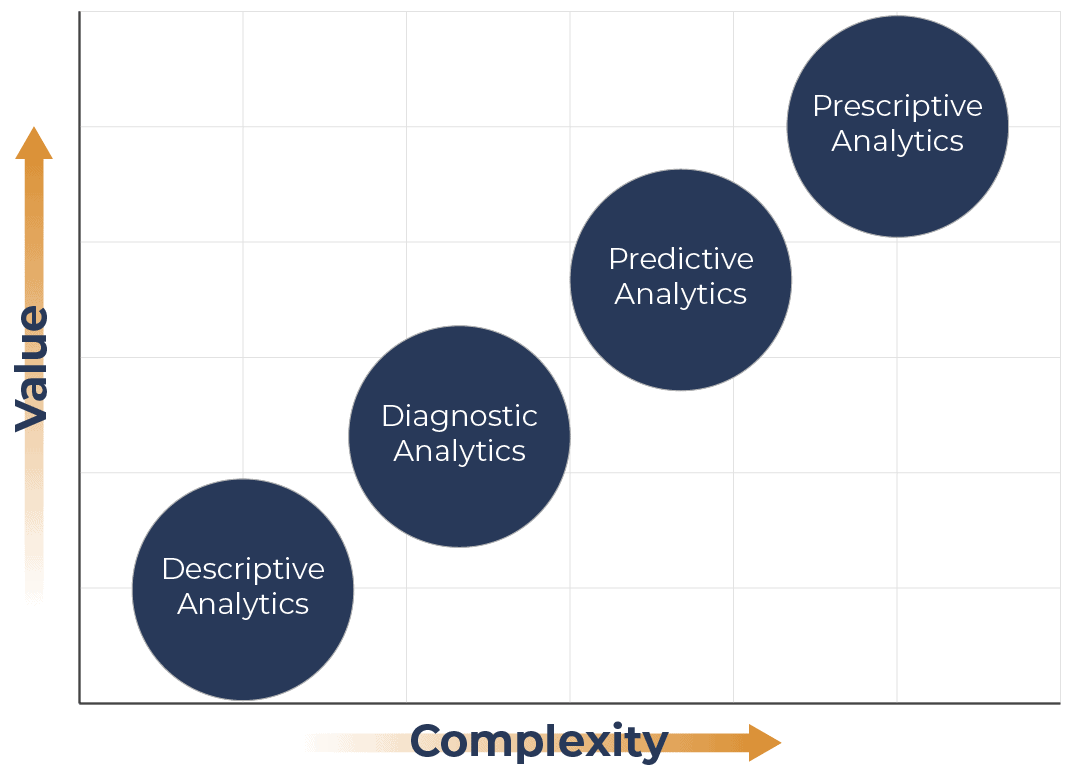
1. Descriptive Analytics
Answers the question:
What happened?
Examples:
- Last month's revenue
- Website traffic
- Conversion rate
This is the most commonly used type of analytics, typically presented through dashboards and reports.
2. Diagnostic Analytics
Answers the question:
Why did it happen?
Examples:
- Revenue declined because the customer retention rate dropped.
- Website traffic decreased due to a Google algorithm update.
3. Predictive Analytics
Answers the question:
What is likely to happen in the future?
By leveraging AI and Machine Learning, businesses can predict:
- Sales performance
- Market demand
- Customer churn
- Consumer trends
4. Prescriptive Analytics
Answers the question:
What should the business do?
Examples:
- Recommend the most effective marketing campaign.
- Optimize pricing strategies.
- Allocate budgets more efficiently.
- Recommend the optimal inventory levels.
Prescriptive Analytics represents the most advanced level of data analytics, providing actionable recommendations that directly support business decision-making
Benefits of Data Analytics for Businesses
1. Data-Driven Decision Making
One of the most significant benefits of Data Analytics is that it enables businesses to make decisions based on real data rather than relying solely on experience or intuition. By analyzing business performance metrics, customer behavior, and market trends, organizations can accurately assess their current situation, identify opportunities, and anticipate potential risks.
As a result, business decisions are supported by clear evidence, helping to minimize errors, optimize operational efficiency, and improve the likelihood of success in an increasingly competitive marketplace.
2. Better Understanding of Customers
Through data analysis, businesses can gain valuable insights into their customers, including:
- Which products customers prefer.
- Their purchasing behavior.
- The times when they are most likely to make purchases.
- The most effective marketing and communication channels.
These insights enable businesses to personalize customer experiences, strengthen customer relationships, and improve conversion rates.
3. Cost Optimization
Data Analytics enables businesses to identify inefficiencies in their operations through comprehensive data analysis. It helps organizations uncover ineffective processes, resource wastage, and unnecessary expenses that reduce overall operational performance.
Based on these insights, businesses can implement appropriate improvements, optimize workflows, allocate resources more efficiently, and manage costs more effectively. This not only reduces operational expenses but also enhances productivity, increases profitability, and lays the foundation for sustainable long-term growth.
4. Trend Forecasting
Instead of merely reacting to market changes, businesses can proactively prepare for future developments.
This capability is especially valuable in industries such as:
- E-commerce
- Banking
- Finance
- Retail
- Logistics
5. Gaining a Competitive Advantage
Organizations that effectively leverage data are able to:
- Respond to market changes faster than their competitors.
- Deliver more personalized products and services.
- Develop more effective business strategies.
Where Is Data Analytics Applied?
Data Analytics has become an essential tool across a wide range of industries, including:
- E-commerce: Product recommendations, demand forecasting, and personalized shopping experiences.
- Banking: Fraud detection, credit assessment, and risk analysis.
- Healthcare: Diagnostic support, medical record analysis, and disease outbreak prediction.
- Manufacturing: Predictive maintenance, supply chain management, and production line optimization.
- Marketing: Customer analysis, campaign performance measurement, and marketing budget optimization.
Future Trends in Data Analytics
Data Analytics continues to evolve rapidly, driven by advances in:
- Artificial Intelligence (AI)
- Machine Learning
- Big Data
- Cloud Computing
- Generative AI
- Real-time Analytics
In the future, businesses will not only analyze data after events occur but will also be able to predict outcomes and automatically recommend optimal actions in near real time.
In today's digital era, data has become a strategic asset for every business. However, its true value can only be realized when it is analyzed and transformed into meaningful, data-driven decisions. Data Analytics not only helps organizations gain a deeper understanding of their internal operations and customers but also enables them to forecast trends, optimize business processes, and strengthen their competitive edge.
Investing in Data Analytics is ultimately an investment in sustainable growth within an increasingly data-driven business environment. Whether for small businesses or large enterprises, building strong data analytics capabilities is essential for adapting to change and achieving long-term success.