.png)
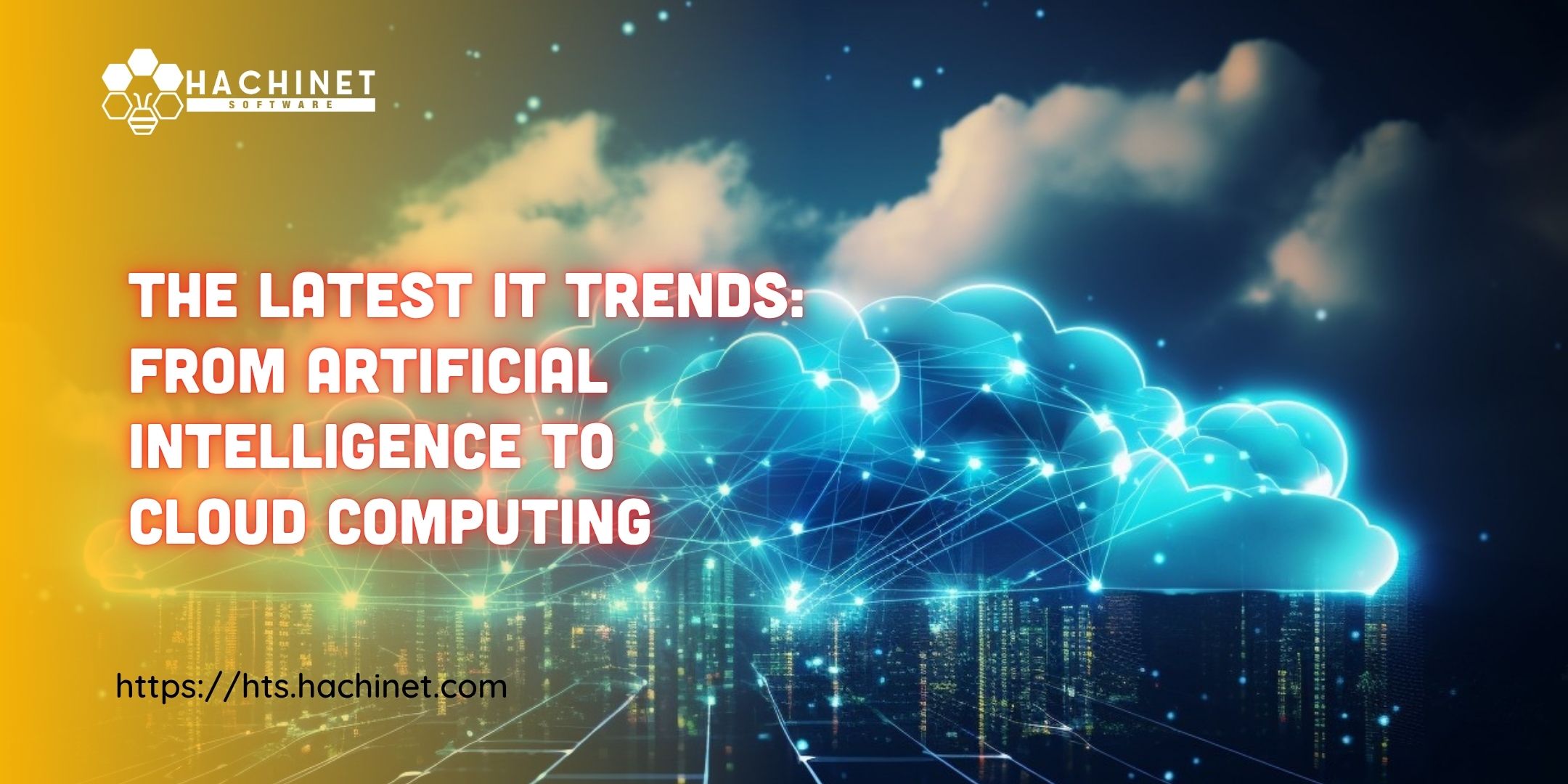
The Latest IT Trends: From Artificial Intelligence to Cloud Computing
The Information Technology (IT) industry is evolving at an unprecedented pace. Breakthroughs in Artificial Intelligence (AI), Cloud Computing, Big Data, and automation technologies are transforming the way businesses operate, innovate, and compete.
As digital transformation becomes a top strategic priority for organizations worldwide, keeping up with emerging technology trends is no longer optional—it is essential. Businesses that embrace these innovations can improve operational efficiency, enhance customer experiences, and gain a sustainable competitive advantage.
In this article, we'll explore the most significant IT trends shaping the future of technology and how organizations can prepare for the digital era.
1. Artificial Intelligence Continues to Lead Technological Innovation

Artificial Intelligence is no longer a futuristic concept—it has become an integral part of modern business operations across industries such as finance, healthcare, manufacturing, e-commerce, and customer service.
Today's AI technologies can:
- Process massive volumes of data within seconds.
- Analyze business performance and predict future trends.
- Generate high-quality text, images, and software code.
- Enhance customer experiences through intelligent chatbots and virtual assistants.
- Automate repetitive and time-consuming tasks.
One of the most exciting developments is the rise of Generative AI and AI Agents. These intelligent systems can not only generate content but also plan, execute, and coordinate multiple tasks autonomously, helping organizations make faster and smarter decisions.
2. Cloud Computing Becomes the Foundation of Modern Enterprises
Cloud Computing has evolved far beyond simple online storage. Today, it serves as the core infrastructure supporting modern enterprise applications and digital services.
Key advantages of cloud computing include:
- Lower infrastructure investment costs.
- Flexible resource scaling based on business needs.
- Faster application deployment.
- Improved backup and disaster recovery capabilities.
- Greater support for remote and hybrid work environments.
Many organizations are adopting Hybrid Cloud and Multi-Cloud strategies to improve flexibility, optimize performance, and reduce dependency on a single cloud provider.
3. Cloud-Native Architecture and Kubernetes Become the New Standard
Modern software applications are increasingly designed using Cloud-Native principles, enabling organizations to maximize the benefits of cloud infrastructure.
Key advantages include:
- Faster deployment cycles.
- Seamless scalability.
- High availability and fault tolerance.
- Continuous updates with minimal service disruption.
Meanwhile, Kubernetes has become the industry-standard container orchestration platform, allowing businesses to deploy, manage, and scale containerized applications efficiently while optimizing infrastructure resources.
4. Big Data and Advanced Analytics
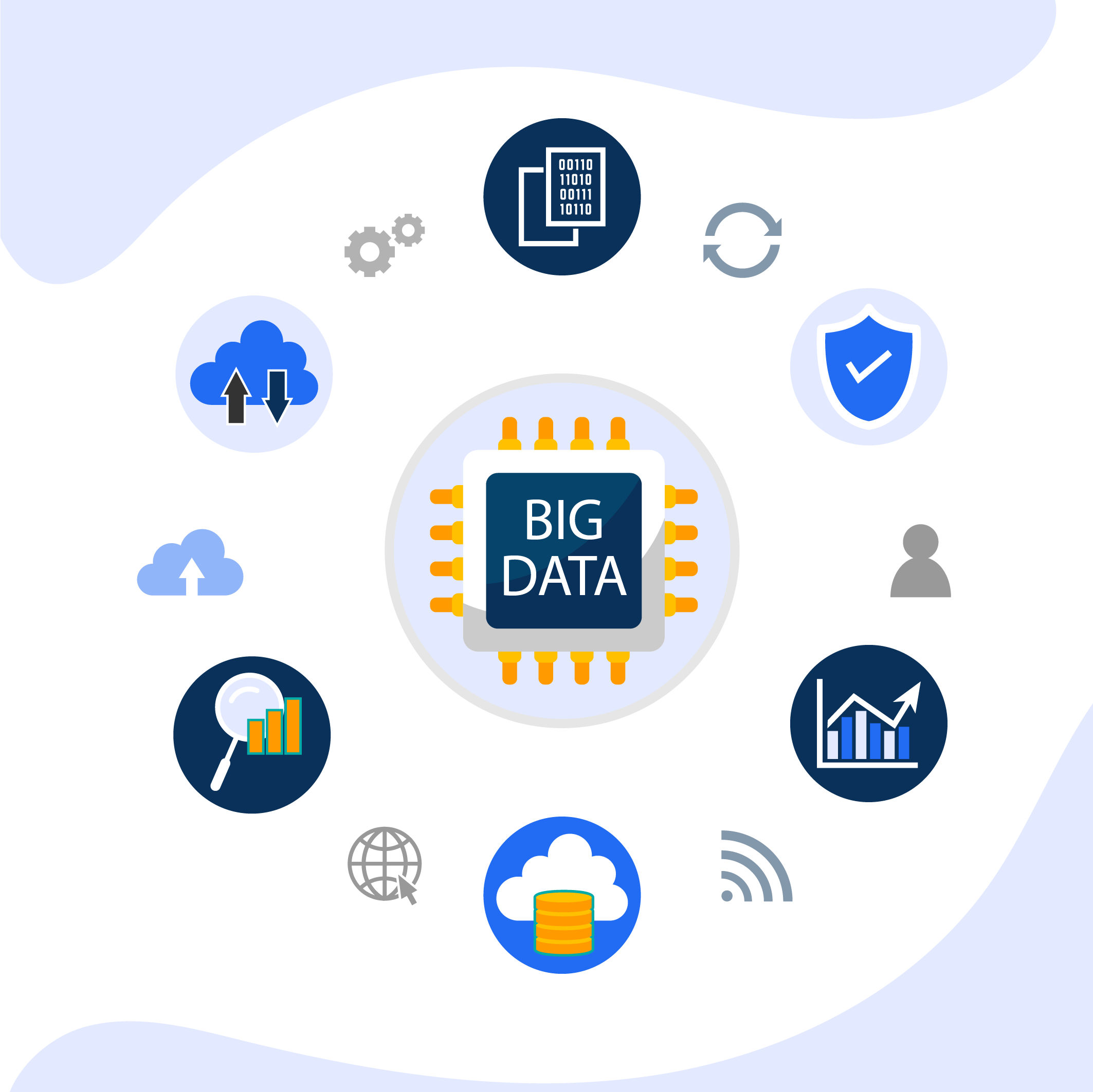
Data has become one of the most valuable strategic assets for modern organizations.
With advanced analytics platforms, businesses can:
- Better understand customer behavior.
- Predict market trends.
- Personalize products and services.
- Optimize business operations.
- Make informed, data-driven decisions instead of relying on intuition.
The combination of Big Data and Artificial Intelligence is creating intelligent analytics platforms capable of delivering faster insights and supporting more accurate business decision-making.
5. Process Automation with AI and RPA
Robotic Process Automation (RPA), combined with Artificial Intelligence (AI), is helping organizations automate a wide range of repetitive and rule-based business processes, including:
- Invoice processing.
- Data validation and verification.
- Document and records management.
- Customer service operations.
- Report generation and business monitoring.
By automating these routine tasks, businesses can minimize human errors, reduce operational costs, increase productivity, and enable employees to focus on higher-value strategic activities.
6. DevSecOps: Integrating Security into Software Development
Traditionally, security testing was performed only during the final stages of software development. Today, the DevSecOps approach embeds security practices throughout the entire Software Development Life Cycle (SDLC).
Key benefits of DevSecOps include:
- Early detection of security vulnerabilities.
- Faster software release cycles.
- Improved software quality and reliability.
- Lower costs associated with fixing security issues.
As cybersecurity threats continue to evolve, DevSecOps has become a best practice for organizations seeking to deliver secure, high-quality software at speed.
7. Internet of Things (IoT) and Edge Computing
Billions of smart devices are now connected through the Internet, creating an increasingly interconnected IoT ecosystem.
When combined with Edge Computing, data can be processed closer to where it is generated instead of being transmitted entirely to centralized data centers.
This approach offers several advantages:
- Reduced latency.
- Lower bandwidth consumption.
- Faster data processing.
- Improved real-time responsiveness.
These technologies play a crucial role in smart manufacturing, smart cities, autonomous vehicles, healthcare, and industrial automation.
8. Low-Code and No-Code Development

As the demand for software applications continues to grow, Low-Code and No-Code platforms enable organizations to build applications with minimal or no traditional programming.
Key benefits include:
- Faster application development.
- Lower development costs.
- Rapid prototyping and innovation.
- Greater involvement of business users in application development.
Although these platforms are unlikely to replace professional software development entirely, they significantly accelerate digital transformation by empowering organizations to build solutions more efficiently.
How Can Businesses Prepare for Emerging IT Trends?
To remain competitive in an increasingly digital world, organizations should:
- Develop a clear and comprehensive digital transformation strategy.
- Invest in scalable and flexible cloud infrastructure.
- Integrate AI into high-value business processes.
- Continuously upskill employees with digital competencies.
- Strengthen cybersecurity and data governance practices.
- Monitor emerging technology trends and adapt business strategies accordingly.
By combining technology, people, and well-defined business processes, organizations can maximize the value of digital innovation while maintaining long-term competitiveness.